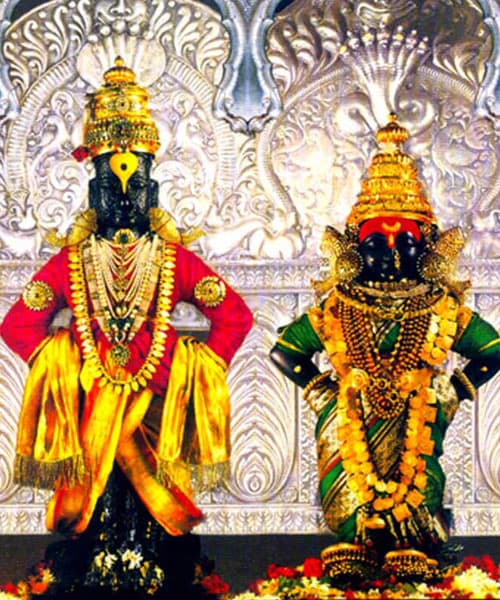
Lord of Pandharpur
।। राम कृष्ण हरी ।।
The parabrahma or the God of Pandharpur is worshipped and lovingly called by his devotees with many names in different course of the time, like Pandharinath, Pandurang, Pandhariraya, Vithai, Vithoba, Vithumauli, Vitthalgururao, Pandurang, Hari etc. However, today this God is well-known as Pandurang and Shri Vitthal.
Many historians and researchers tried to find out the etymological origin of the word “Vitthal”. Some scholars believe that it is a distorted form of the original word Vishnu. The words like Vittharas, Vitta found in various Kannad epigraphs are basically the elaboration of the word Vishnu. The Great Saint poet Tukaram defines the word Vithoba in one of his abhangas that ‘Vi’ stands for ‘Knowledge’ + Thoba stands for ‘form’. Thus Vithoba stands for the ‘form of ultimate Knowledge’ or ‘idol of ultimate Knowledge’. It is also believed that Vi stands for bird Eagle + Thoba stands for sitting place, thus Vithoba stands for the ‘God who sits on Eagle’. Vithoba is God Vishnu, standing on a brick and resting his arms on his waist. It is believed that Shri Krishna, Shri Vishnu and Shri Vithoba are all different names and forms of the one and the same God. Shri Krishna is known as incarnation of Shri Vishnu which took place on Wednesday (Shravan Vadya Ashtami) at the end of Dwaparyuga. Vithoba is Shri Krishna only. Wednesday is known as the day of Vithoba. So devotees (varkari) of Vithoba never leave Pandharpur on Wednesday even now.
The Varakari tradition, laid down by Sant Dnyaneshwar and carried forward by Sant Tukaram, Sant Namdev, and others, centres on devotion to Vitthal through Abhangs (devotional hymns), kirtan, and the annual Wari pilgrimage to Pandharpur.
Shri Krishna, Shri Vishnu and Shri Vithoba are all different names and forms of the one and the same God. The name Vitthal itself encompasses the entire Hindu Trinity — Brahma, Shiva, and Vishnu — in one form.
As defined by Sant Tukaram, Vithoba is the form of ultimate Knowledge. True devotion is not blind faith but the pursuit and embodiment of supreme knowledge through love and surrender.
The sacred pilgrimage walk to Pandharpur represents the devotee’s journey towards God. GMUKPT honours this tradition through Wari walks across the UK — from the Royal Parks of London to Ben Nevis and Snowdonia.
Experience the teachings of Shree Vitthal – Rukmini through our regular Upasana sessions and community gatherings.